McKnight’s coverage and new webinar polls show strong interest in AI — and an urgent need for clear guardrails in skilled nursing.
Ken Bell
Chief Marketing Officer · 4 min read
AI Policy Just Got Real for Skilled Nursing
When McKnight’s Long-Term Care News singled out our recent Carebility webinar with OVATION Rehabilitation for its own article on Shadow AI and the “mosaic effect,” we took that as a pretty clear signal:
AI policy has officially moved out of the tech bubble and into the real world of skilled nursing.
And not a moment too soon.
McKnight’s pulled straight from the issues our panel raised: Shadow AI, hidden PHI risk, and the need for clear AI policies now. SNFs can’t wait till every employee has downloaded three apps, added a browser extension, and asked ChatGPT to help with their documentation.
AI use doesn’t wait for an official rollout
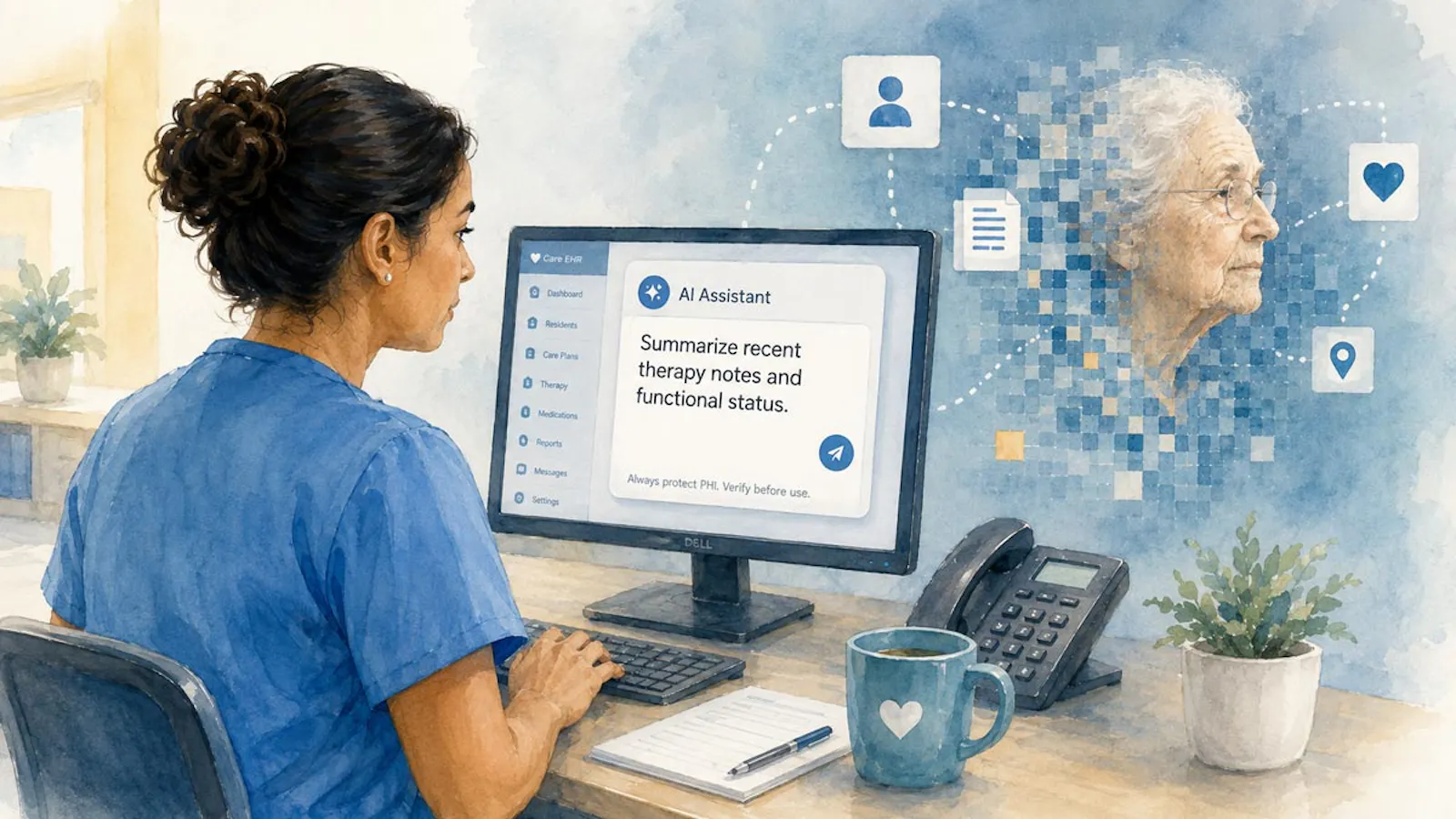
AI is already showing up in SNF workflows.
It’s built into documentation systems, EMRs, vendor platforms and clinical tools. Staff are also finding public AI tools on their own because, understandably, anything that saves 20 minutes on a busy shift is going to get someone’s attention.
That unofficial use is called Shadow AI.
It doesn’t mean someone is intentionally being reckless. More often, it’s a well-meaning employee trying to work faster without realizing that the information they enter could create privacy, compliance, or accuracy problems.
One risk highlighted in the webinar is the mosaic effect. A single detail may not identify a resident. But several seemingly harmless details combined may paint a much clearer picture.
Removing the resident’s name does not automatically make the information safe to share.
SNF professionals are interested in AI
Here’s the good news: Our webinar polls suggest that skilled nursing professionals aren’t rejecting AI.
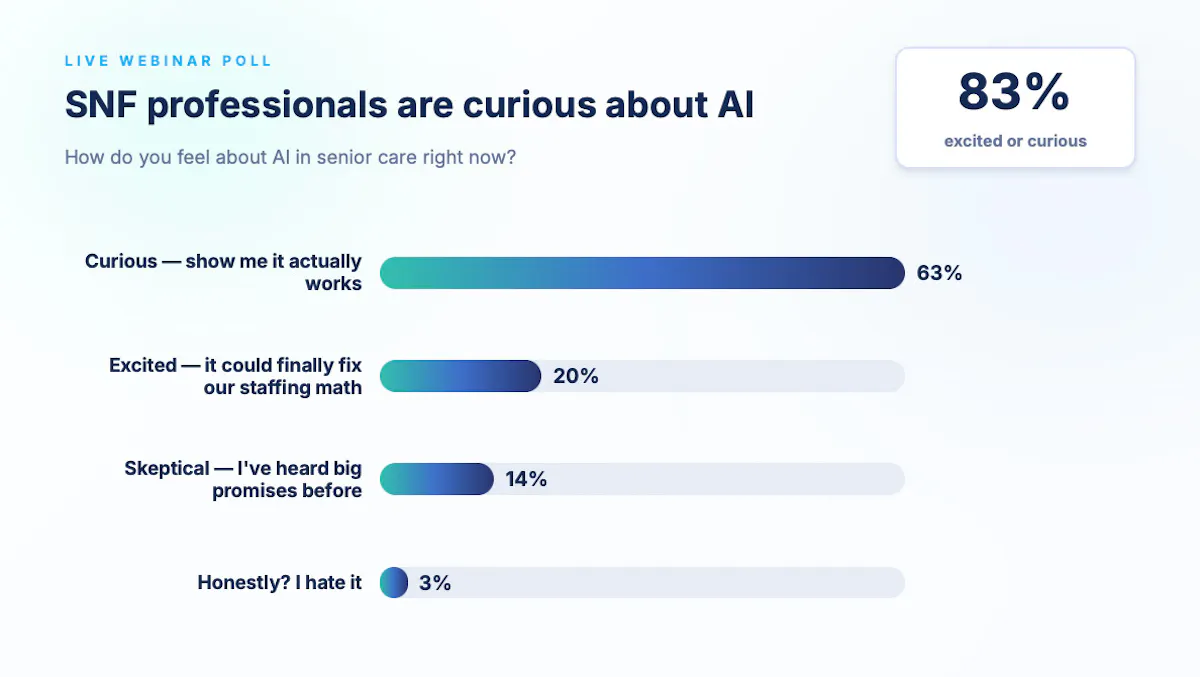
When we asked attendees how they felt about AI in senior care:
20% were excited
63% were curious but wanted to see how it works
14% were skeptical
3% honestly hated it
So, 83% were either excited or curious.
That feels about right. Most healthcare professionals aren’t asking for a robot to take over the building. They’re asking a much more practical question:
Can this make my job easier without creating five new problems?
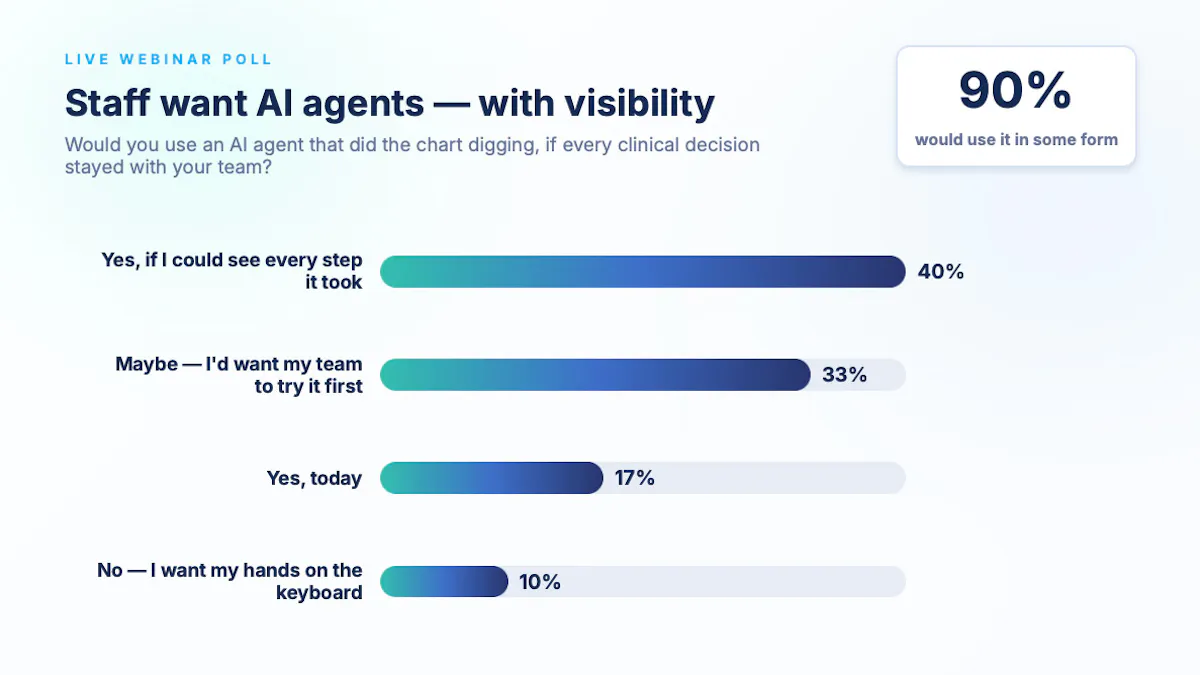
A second poll described an AI agent that could handle some of the charting, digging, and button-clicking while the clinical decision stayed with the team.
Nine in 10 respondents said they would at least consider using it.
But most wanted visibility or a chance to test it first. Forty percent wanted to see every step the AI took, while another 33% wanted to test it with their teams first.
Not reluctance, just common sense.
The gap is structure, not interest
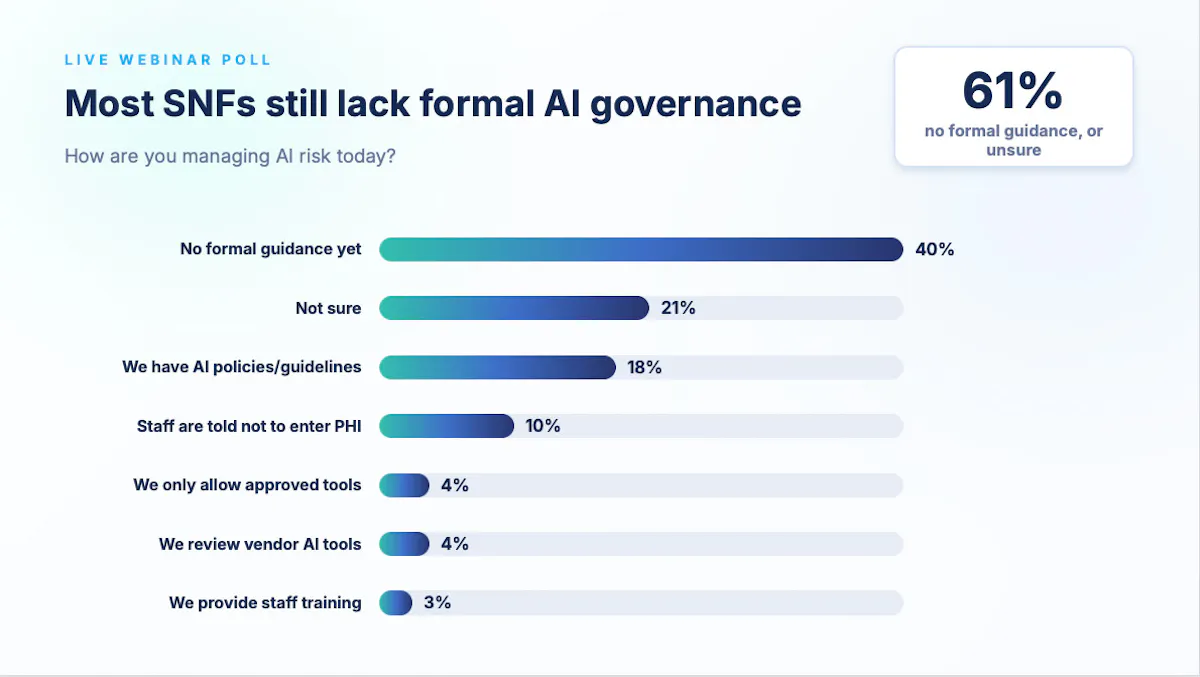
In the webinar, we also asked how attendees’ organizations are managing AI risk.
The largest group, 40%, said they had no formal guidance yet. Another 21% weren’t sure what their organization was doing.
That’s the real opportunity.
Post-acute care doesn’t need to spend another year debating whether AI is coming. As OVATION’s Kathy Claypool said during the webinar, SNFs don’t need to decide whether AI will be used. They need to decide how it will be used.
Governance isn’t about locking AI in a closet and hoping nobody finds the key. It’s how organizations make AI usable now.
That starts with basic questions:
Where are employees and vendors already using AI?
Which tools are approved?
What data should never be entered?
How will AI-generated answers be checked?
Who remains responsible for the final decision?
Nobody needs a 75-page policy binder gathering dust next to the copier. Staff need clear boundaries, approved tools, and practical training they can use during an actual shift.
Bringing the right people into the conversation
This is exactly why we created the webinar.
AI in skilled nursing sits at the intersection of clinical care, compliance, operations, and technology. No single department can figure it out alone.
At Carebility, we want to keep bringing those voices together and making difficult, fast-moving topics useful for the people doing the work. That means less hype, fewer vague predictions, and more honest conversations about what’s already happening inside SNFs… and what leaders can do about it.
McKnight’s bringing this issue to a wider industry audience matters. Emerging technology doesn’t always receive sustained attention in post-acute care, even when it’s already changing how people work.
The good news is that providers still have time to put the right guardrails in place and get ahead of the risk.
Dig deeper
Want the full story?
Watch the full Carebility webinar for the deeper discussion on PHI protection, documentation risk, vendor tools, and responsible AI use in skilled nursing. Then read the McKnight’s article for their take on Shadow AI and the mosaic effect.